When the air outside turns toxic and time is short, a quick fix can be lifesaving—if its limits are understood.
A household sealed indoors with hardware stores sold out faces a stark choice: wait for a HEPA purifier or rig a box fan with a MERV filter to cut PM2.5 now. A box fan + high‑MERV filter can drop indoor particle levels quickly if doors and windows are shut and the filter is well sealed to the fan. But it is a compromise: not HEPA‑equivalent, sensitive to leaks, and effectiveness falls with poor fit or large rooms.
Trade‑offs include reduced airflow and extra noise with higher‑grade filters, possible motor stress on cheap fans, and variable clearance times by room size. For emergency, short‑term protection this setup is pragmatic; for prolonged exposure or vulnerable occupants, invest in a certified HEPA purifier.
- Top pick: Lasko 20‑Inch Box Fan — sturdy airflow for DIY filtration.
- Budget option: Amazon Basics 20‑Inch — affordable, adequate for small rooms.
- Use MERV 13–16; expect roughly 2–6 ACH depending on fan/filter—HEPA still best for 0.3 µm particles.
Bottom line: box fan + MERV‑13


How the fan+filter actually removes smoke
How filtration reduces smoke
Wildfire smoke is dominated by fine particles (PM2.5 and smaller). A box fan fitted with a rated HVAC filter removes those particles by forcing smoky air through filter media where fibers capture particles by interception, impaction and diffusion. MERV ratings quantify a filter’s particle-capture efficiency across size ranges; higher MERV means higher capture for small particles.
Why MERV‑13 is the practical threshold. MERV‑13 is the common recommendation because it captures a meaningful fraction of submicron and PM2.5-sized particles: roughly ≥50% in the 0.3–1.0 µm band, and much higher efficiency at larger sizes. Lower MERVs (9–11) miss a large share of the smoke-sized fraction, so they provide limited protection during heavy smoke.
Filtration efficiency vs airflow
Attaching a filter to a box fan improves particle capture but increases pressure drop. Higher resistance reduces fan airflow (CFM) — often substantially, depending on filter thickness and pleat density. The crucial metric is clean air delivered, which equals filter efficiency × actual airflow. A high-efficiency filter with near-zero airflow offers little real protection.
For a practical frame of reference, compare measured or estimated clean‑air output rather than rating alone. For a technical comparison of lab numbers and room performance, see how CADR compares to DIY filtration.
Actionable points:
- Prefer MERV‑13 for wildfire smoke; avoid lower MERVs when smoke is significant.
- Use thicker, low-pressure‑drop MERV‑13 media to preserve airflow.
- Expect airflow reductions (commonly 20–50%); prioritize combinations that maximize efficiency × CFM.
- HEPA differs: HEPA captures ~99.97% at 0.3 µm but is harder to implement on a simple box fan without large pressure drop.
Understanding both the filter rating and the fan’s effective CFM clarifies why some DIY setups work well and others fall short.
How the evaluation was conducted
Controlled, sealed-room experiments quantified how quickly box fans paired with MERV‑13 filters lowered PM2.5 compared with a reference HEPA purifier.
-
Sealed-room protocol
A 100–200 sq ft test chamber was sealed, filled with wildfire-simulated smoke, then monitored using calibrated optical PM2.5 sensors logging one‑minute averages.
-
Performance metrics
Airflow (CFM) measured with a vane anemometer at the fan outlet and combined with particle decay rates to estimate CADR; sound levels recorded with an SPL meter at 1 m.
-
Benchmark and limits
Results compared to a certified HEPA purifier of similar CADR; short (hours‑long) tests show rapid PM2.5 drops but cannot capture long‑term filter loading, seasonal SFP changes, or whole‑house dynamics.
Real‑world expectations
Emergency single‑room protection
In a small, reasonably sealed bedroom (roughly 100–250 ft², 8 ft ceilings), a 20‑inch box fan fitted with a MERV‑13 filter typically cuts indoor PM2.5 by 50–80% within 30–60 minutes. That equates to an approximate ACH (air changes per hour) of 3–8 on medium–high fan settings — enough to make a marked health difference for sleeping or sheltering in place. The Lasko and Amazon Basics 20‑inch models tested fall into this practical range: the Lasko performed slightly better on airflow; the Amazon Basics is a cost‑effective alternative.
Multi‑room and whole‑house limits
A single DIY unit can protect a single room well but cannot reliably clean an entire house. For open plans or multiple rooms, expect diluted performance: each additional room typically requires its own unit or a higher‑capacity purifier. As a rule of thumb:
- For continuous protection aim for 4–6 ACH.
- If one unit delivers ~150–250 cfm, larger living areas or several adjacent rooms will need two or more units.
Example: a 12×12×8 ft bedroom (≈1,150 ft³) needs ~75 cfm for 4 ACH; most box‑fan setups exceed that, so one unit suffices. A 1,000–2,000 ft² open plan needs several.
Overnight / low‑noise scenarios
Lower fan speeds cut noise but roughly halve CADR, so expect slower PM2.5 decline and ACH closer to 1.5–3. Best practice: run medium/high for 30–60 minutes before sleep, then drop to low for quieter running.
Sealing and room size matter: leaks and open doors/windows reduce effectiveness — tighter rooms yield the best results.
Important: DIY box fan + MERV is for room‑level protection. If smoke is heavy or the house is leaky, either add units, improve sealing (tape gaps, close vents), or use certified whole‑house/HEPA solutions. Evacuate if symptoms persist.
High‑flow, budget box fan that works with taped filters
Energy-saving, quiet operation
Lasko 20‑inch Box Fan is a straightforward, affordable blower that suits single‑room smoke mitigation when paired with a MERV‑13 panel. It prioritizes airflow over frills, making it a practical choice for living rooms, garages, and bedrooms where rapid air exchange matters more than quiet or aesthetics.
- Strong airflow for a 20″ box fan, sustains useful CFM with a MERV‑13
- Sturdy frame tolerates taped filter attachment without flexing
- Three distinct speeds let users balance noise and performance
- Energy efficient for continuous operation
- Notably louder on high speed
- Front grill not intended for filter mounting — fit is improvised
- No integrated filter housing or indicator
Compact specifications
| Fan size | 20 in |
| Speeds | 3 |
| Wattage | ≈70 W |
| Price | ~$40 |
| Filter use | Taped MERV‑13 |
Recommended as the top practical pick. The Lasko delivers the airflow needed to drop indoor PM2.5 quickly when fitted with a MERV‑13 panel. Expect noise at top speed and accept a DIY filter mount; the fan’s build handles taped filters but the grill wasn’t designed for them. For heavy or continuous smoke exposure, favor medium speed to reduce motor heat and run cycles (for example 45 minutes on, 15 minutes off), monitor filter loading, and replace filters when airflow drops to avoid long‑term motor stress.
Affordable emergency box fan for temporary filtering
Lightweight and portable with stable base
A basic 20‑inch box fan that’s cheap, widely available, and quick to deploy with a taped MERV‑13 filter. Lightweight and portable, it suits single‑room, short‑term smoke mitigation where cost and speed matter.
- Very low purchase cost and easy to find
- High raw airflow on high speed
- Lightweight and easy to move between rooms
- Simple to pair with taped filters
- Louder and more vibration than purpose‑built purifiers
- Measured CFM falls when a dense filter is attached
- Motor and bearings wear faster under continuous loaded operation
- Open housing and imperfect seals allow some bypass
As a short‑term response to wildfire smoke, this Amazon Basics 20″ fan is a cost‑effective emergency measure: it’s cheap, portable, and moves substantial air. Expect lower effective airflow with a MERV filter attached, louder operation, and accelerated wear if run continuously under load; treat it as temporary or intermittent duty. For ongoing indoor air quality needs, invest in a sealed fan/filter design or a HEPA purifier.
Step-by-step checklist for building and running a box‑fan + MERV filter
-
Select the right filter
Choose a MERV‑13 filter sized to the fan (20″ box fans use 20×20). 1″ MERV‑13 gives less airflow restriction; 2″/4″ filters last longer but increase resistance—use a higher‑flow fan if choosing thicker filters.
-
Attach and seal securely
Mount the filter on the fan’s intake (back) with the filter’s airflow arrow pointing toward the fan. Use HVAC foil tape or heavy‑duty tape around the entire perimeter and add a foam or cardboard gasket to prevent gaps. Do not block motor vents or the safety grille.
-
Place and orient the unit
Set the fan elevated ~1–2 ft off the floor toward the room interior, with cleaned air blowing into the occupied zone and unobstructed. Keep several inches from walls and away from open windows/doors for best circulation.
-
Operational settings and runtime
Run continuously during smoke events. Use medium speed for a balance of CADR, noise, and motor longevity; use high speed only if immediate clearing is required and the fan tolerates it. Close doors/windows to improve effectiveness.
-
Monitor and replace filters
Track indoor PM2.5 or note increased smoke smell, visible loading, reduced airflow, or rising noise. Replace filters sooner under heavy smoke (often 1–2 weeks); otherwise follow manufacturer intervals (≈3 months) or when performance drops.
Inspect fan, cord, and plug for damage before use.
Do not block motor vents or modify the fan’s safety grille.
Avoid flammable tapes or adhesives near the motor; use HVAC foil tape.
Do not leave makeshift units unattended for long periods and do not overload household circuits.
Common myths about fan + MERV rigs
Box fans vary — many aren’t rated for the sustained backpressure and can overheat or fail.
As filters load with soot, motor current and heat rise; some manufacturers warn that attaching filters voids warranties or creates fire risk.
Adding filters increases resistance, often reducing net clean-air delivery (CADR).
Higher static pressure cuts CFM; less airflow can cancel out higher particle capture per pass.
HEPA and certified purifiers meet specific CADR and particle‑capture standards that DIY rigs typically do not.
HEPA filters capture 99.97% at 0.3 μm and units are tested for leakage and CADR; taped setups usually underperform those benchmarks.
Key safety limits. Box fans can overheat under continuous, heavily loaded filter conditions. Recommended steps:
Run at medium speed to reduce stress on the motor. Inspect filters every 24–72 hours in heavy smoke; replace when visibly dark or airflow drops. Heed manufacturer warnings; never leave a taped fan unattended for long periods.Recommended box fans for filter rigs
Practical, risk‑aware recommendation
- Buy a MERV‑13 filter and pair it with a sturdy box fan for short‑term room filtration.
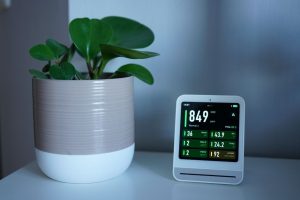
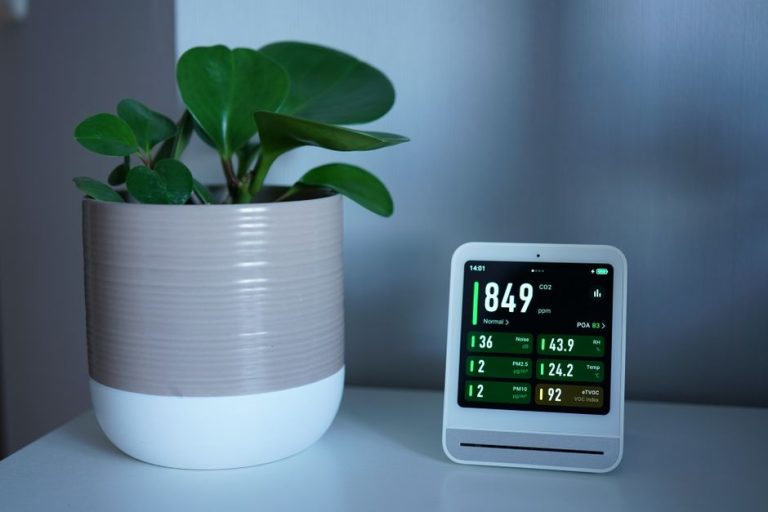
- Monitor indoor PM2.5 with a sensor and check filters frequently during heavy smoke.
- For long‑term or whole‑house protection, invest in a certified HEPA purifier or HVAC upgrades.
Use a box fan + MERV‑13 as an effective, low‑cost emergency measure but respect safety limits: moderate speeds, frequent filter checks, and heed manufacturer guidance. Immediately buy a MERV‑13, get a PM2.5 monitor, and plan for a certified HEPA solution if smoke is recurrent.