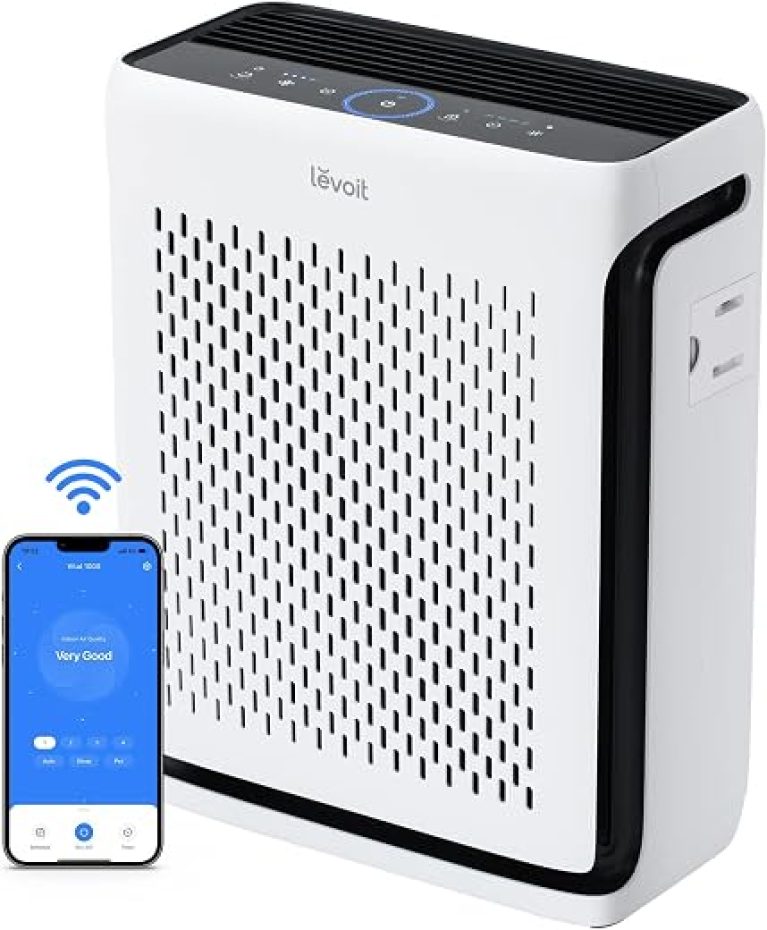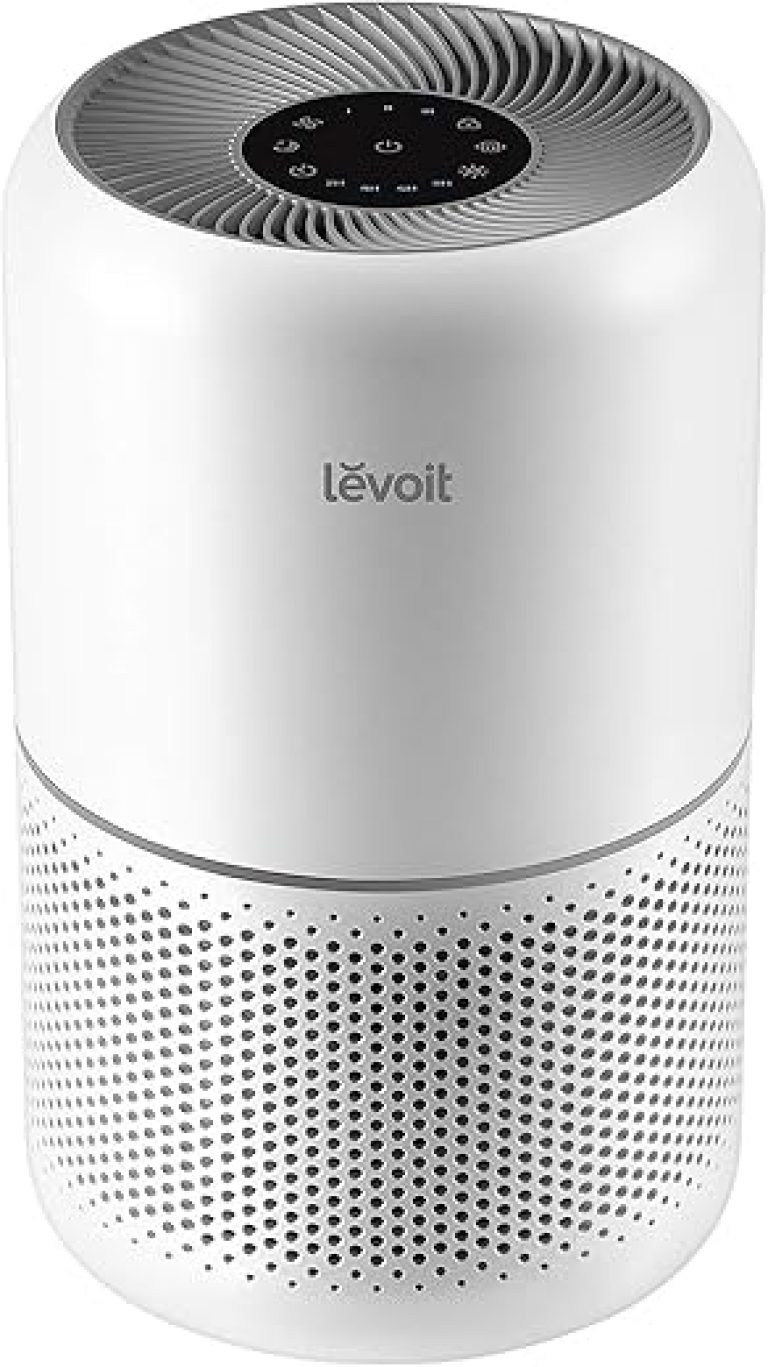
In an open-plan home, vague 'room size' stickers can be dangerously misleading.
Picture an owner in a bustling open-plan living/dining/kitchen where frying, laundry and guests overlap; the ‘fits up to X sq ft’ badge rarely captures ceiling height, airflow, or activity. The decisive variables are room volume and pollutant load: cooking, many occupants, pets, or smoking increase required airflow. Measure floor area and ceiling height to get cubic feet, then set an air-change-per-hour (ACH) target that matches activity. If a single purifier cannot reach the calculated CADR, plan for two units spaced to prevent dead zones.
- Formula: CADR (cfm) = room volume (ft³) × ACH ÷ 60.
- ACH guide: normal open-plan 4–6; heavy cooking/smoking 6–8; high-risk 8+.
- Example: 25×20 ft with 9 ft ceiling = 4,500 ft³; 6 ACH → 450 cfm.
What CADR numbers mean
- CADR (Clean Air Delivery Rate)
The volume of filtered air delivered, reported in cubic feet per minute (CFM) for a specific particle size; higher CADR means faster reduction of that particle type in a room.
- Smoke CADR (fine particles)
Measures removal of very small particles (roughly 0.1–1 µm) such as combustion and PM2.5; crucial for health-relevant fine particulate pollution.
- Dust CADR (medium particles)
Rates the purifier’s performance on mid-size particles (about 1–10 µm) like household dust and skin flakes, which are easier for filters to capture.
- Pollen CADR (large particles)
Reflects removal of larger allergens (>~5 µm) such as pollen; important for seasonal allergies but less critical for indoor fine-particle loads.
- Why three separate numbers are reported
Different particle sizes behave differently and filter media capture them with varying efficiency, so manufacturers list smoke, dust, and pollen CADR to show performance across sizes.
Smoke (fine-particle) CADR is the most relevant metric for large, open-plan living spaces. Fine particles stay airborne longer, mix throughout an open plan, and drive health risks such as PM2.5 exposure.
Key implications:
Fine particles remain suspended and travel farther than larger dust or pollen. Filters and fans remove small particles less efficiently, so smoke CADR often limits overall cleaning speed. A high smoke CADR (or multiple units spaced through the area) shortens the time to reach the desired air-cleaning rate.Select equipment based on the smoke CADR when sizing purifiers for open-plan rooms; the dust and pollen values are useful secondary indicators.
Measure room volume and compute required CADR
-
Measure the space
Measure length, width and ceiling height in feet (or metres). For open-plan areas include any directly connected spaces that share air (no doors or wide openings).
-
Calculate room volume
Multiply length × width × height to get cubic feet (ft³) or cubic metres (m³). Example: 25 ft × 20 ft × 9 ft = 4,500 ft³.
-
Pick an ACH target
Select the air changes per hour (ACH) target appropriate for the activity level and recommendations given earlier (for example, 5 ACH for an active open-plan living area).
-
Convert volume and ACH to CADR (CFM)
Use CADR (CFM) = Volume(ft³) × ACH ÷ 60. If working metric: Required flow (m³/h) = Volume(m³) × ACH; convert to CFM by multiplying m³/h × 0.5886.
-
Worked example
Room: 25 ft × 20 ft × 9 ft = 4,500 ft³. With 5 ACH: CADR = 4,500 × 5 ÷ 60 = 375 CFM. Metric check: 127.5 m³ × 5 = 637.5 m³/h; 637.5 × 0.5886 ≈ 375 CFM. Choose a unit (or combined units) with smoke CADR ≥ 375.
Round up the CADR to allow for furniture, imperfect placement and filter aging. Use smoke CADR for open-plan rooms because it reflects fine-particle removal. When using multiple purifiers, add their CADR values to meet the target.
Choose an ACH target based on risk
Different levels of exposure call for different air-change targets. Use the following as practical guides and always convert the chosen ACH to a smoke CADR (the CADR rating for fine particles) when comparing purifiers.
- Everyday use — 2–3 ACH. Suitable for typical living, low indoor pollution, and steady background ventilation. Good for energy balance and quiet operation.
- Cooking, pets, allergies — 4–6 ACH. Reduces odors, pet dander, and allergenic particles. Run at medium to high fan speeds during activity and for 30–60 minutes after.
- High risk (smoke, wildfire, immunocompromised) — 8–12+ ACH. Prioritize continuous operation at high speed and consider multiple units to achieve even airflow.
Practical tips: choose a purifier whose smoke CADR meets or exceeds the CADR calculated from the selected ACH; for open-plan rooms, lean toward the higher end of the range and run units continuously during events.
Smoke CADR targets the smallest, most health-relevant particles (PM2.5 and similar). When in doubt—wildfire season, wood smoke, or immunocompromised occupants—require the smoke CADR rating rather than pollen or dust numbers.
One high‑CADR unit versus multiple mid‑sized units
One unit or several?
Decide based on required CADR and room layout. As a rule of thumb, if the computed smoke‑CADR exceeds what typical mid‑size purifiers deliver (about 300–400 cfm), a single high‑CADR unit simplifies circulation and management. For required CADR below that range, two or three mid‑sized units (150–250 cfm) placed strategically produce more uniform cleaning at lower fan speeds.
Placement rules for open‑plan spaces
- Place units near pollutant sources (kitchen cooktop, fireplace, or heavy‑traffic seating), not hidden behind sofas or cabinets.
- Keep intakes and exhausts unobstructed; allow ~30–60 cm (12–24 in) clearance from walls and avoid corners or curtains.
- Position along the main airflow path—between source and room—so cleaned air mixes throughout the space.
- Account for doors: if adjacent rooms stay closed, treat them as separate zones; when doors open, place units to serve the largest connected volume.
- With multiple units, stagger placement (opposite ends or evenly spaced) to avoid short‑circuiting cleaned air.
Trade‑offs and maintenance A single high‑CADR unit is simpler to manage but can be noisy at top speed and is a single point of failure. Multiple mid units run quieter individually and improve coverage but add filter replacements and may use more combined energy. Plan maintenance: multiple units mean more filters—see how often to replace HEPA filters for guidance.
Running several units at low speed often achieves the target CADR more quietly than one unit at max speed, but expect higher replacement and service tasks.
Quick shopping checklist
-
CADR matchConfirm the unit's smoke CADR meets or exceeds the calculated requirement.Look forSmoke CADR ≥ requiredAvoidOnly pollen/dust CADR
-
Filter classChoose true HEPA (H13+) or MERV≥13; avoid 'HEPA‑like' claims.Look forCertified HEPA / MERV≥13AvoidHEPA‑like or washable foam
-
NoiseCheck dB at the fan speed needed — spec sheet values only.Look fordB listed at target speedAvoidOnly max‑speed dB
-
Operating costCompare filter price, replacement interval, and power draw for annual cost.Look forFilter price and watts listedAvoidNo replacement or power info
Performance matters more than extras. Check independent CADR verification, watts, and warranty.
Energy use and filter cost affect lifetime price.Common CADR misconceptions — concise answers
Does a higher CADR always mean the purifier is better?
Higher CADR removes particles faster, but ‘better’ depends on noise, energy use, and filter life. After a point, doubling CADR gives diminishing practical benefit if room mixing, noise tolerance, or cost become limiting factors.
Are CADR numbers directly comparable between brands?
CADR is an AHAM standard (smoke/dust/pollen) so AHAM-listed values are comparable for the same particle category. Watch for non‑AHAM claims, different test conditions, or marketing room‑coverage numbers that aren’t equivalent to CADR.
Can central HVAC replace a portable air purifier?
A properly configured HVAC with high‑efficiency filters and continuous fan runtime can provide whole‑house filtration, but many systems lack runtime or filter efficiency for fine PM2.5. Portable units deliver targeted, faster ACH in occupied rooms and are preferable for smoke or acute events.
If two units each have CADR X, do they add up to 2X?
In a well‑mixed space, CADRs are roughly additive and will increase effective ACH. Placement and airflow matter: distribute units to avoid dead zones and ensure circulation for near‑linear gains.
Does CADR cover gases, odors, or viruses?
CADR measures particle removal only. Gases and odors require activated‑carbon or other sorbents; viruses depend on particle capture and ACH, so check filter media and supplementary technologies.
How lab CADR became room targets
Start with the chosen ACH and the room’s volume, convert to smoke CADR using CADR = (ACH × volume) / 60, and treat that as the baseline target.
-
Calculate the baseline
Compute smoke CADR from room volume and ACH, then round up to the nearest model rating to avoid underperformance.
-
Adjust for real conditions
Apply a 20–40% margin for placement losses, open‑plan airflow, furniture, and filter loading over time.
-
Decide configuration and placement
Choose one high‑CADR unit or multiple units that sum to the boosted target, and place units to reduce dead zones and noise impact.
Checklist — immediate next steps
- Measure room volume and select ACH tier (low/medium/high risk).
- Compute baseline smoke CADR with the formula, then add a 25–30% margin.
- Buy or deploy unit(s) to meet the boosted CADR, place for even coverage, and verify with a particle monitor; schedule filter replacements.
Converting lab CADR into a practical target is a three‑step process: compute CADR from ACH, boost for real‑world losses, then choose and place units to meet that boosted number. Validation with a particle monitor and a maintenance schedule completes the plan.