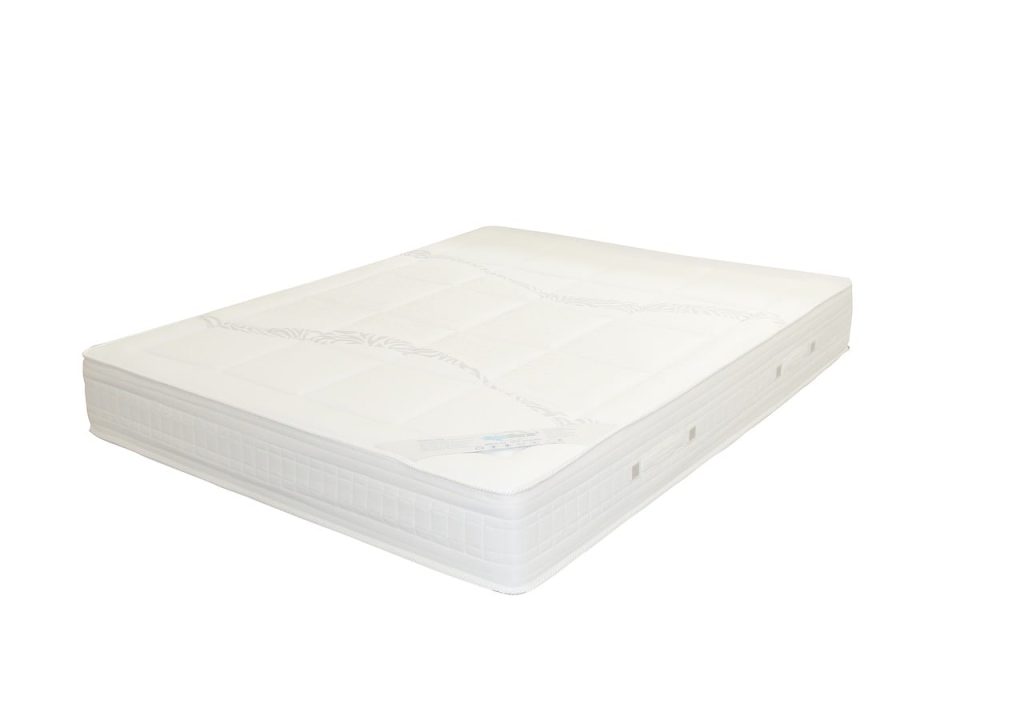
When side sleeping leads to a sore hip, the mattress feels to blame—but the fix is usually more specific.
A habitual side sleeper wakes stiff in the hip: the shoulder and pelvis sink, but the greater trochanter presses against the surface. The choice feels binary — soft contouring that cushions pressure or firmer support that keeps the spine aligned — yet both matter. Mattresses that actually reduce hip pain combine a pressure-relieving comfort layer (memory foam or latex) with a firmer, zoned transition or coils beneath to prevent excessive pelvic sink. Effective evaluation uses pressure mapping and a straight spinal line in side posture: look for pronounced hip cradle plus lumbar support. This section identifies which construction details relieve hip pain and how to weigh the trade-offs when selecting between contour and support.
- Sleepmax Mist Queen Hybrid for Hip Relief — Top pick: zoned foam over responsive coils for even pressure and alignment.
- BedStory Firm Hybrid Queen for Back Pain — Best value: firmer profile with lumbar zoning to limit pelvic sink.
- 14-Inch Medium Firm Hybrid Queen Mattress — Runner-up: balanced comfort layer plus supportive core for mixed needs.
Top three mattresses for side sleepers with hip pain


How side sleeping stresses the hip
Side sleeping concentrates body weight onto the lateral pelvis, placing focused pressure on the greater trochanter — the bony prominence of the femur. When the shoulder fails to sink adequately into the comfort layer, the torso stays elevated and the pelvis must drop or rotate to keep contact, producing pelvic obliquity and increased compression at the hip.
That pelvic tilt creates a hinge point at the hip: lateral flexion of the lumbar spine, asymmetric loading of the gluteal tissues, and higher shear forces across the trochanteric bursa and surrounding soft tissue. Over time, those concentrated stresses manifest as localized pain and morning stiffness.
What the mattress must do
- Local contouring at the shoulder: allow the shoulder to compress so the torso can settle without twisting.
- Targeted hip support beneath the greater trochanter: cradle the hip to distribute load rather than let it bottom out.
- Gradual resistance between zones: avoid abrupt firmness changes that create a hinge at the pelvis.
- Maintain overall support to preserve neutral pelvic alignment and spinal line.
Practical test: assume a side position and observe whether the shoulder compresses while the hip remains supported without excessive sink.
Prioritized buying checklist — score mattresses fast
-
Comfort layer firmness and thicknessSide sleepers with hip pain need localized contouring without bottoming out. Match comfort-layer softness to body weight and ensure enough thickness to cradle the greater trochanter.Look for2–4 in pressure‑relieving layer; effective firmness ~4–6/10 for light–average sleepers, ~6–7/10 for heavier sleepersAvoidThin (<1.5 in) memory foam or very firm (8+/10) surfaces that block contouring
-
Zoned support under the hipsZoned cores or targeted hip channels give softer give at the hip and firmer support under the pelvis to preserve lateral alignment.Look for3–5 zone construction or reinforced lumbar bands with a softer hip zoneAvoidUniform single-density cores that allow the hip to sink too far or stay pinned
-
Hybrid vs all‑foam — trade-offs and coolingHybrids offer better edge support and airflow; all‑foam gives smoother contouring. Pair construction choice with breathable covers and bedding for temperature control.Look forCoil core + 2–3 in comfort foam/latex for hybrids; gel/latex top layers for all‑foam; consider cooling bedding combos for pressure reliefAvoidDeep, slow‑recovery foam with no cooling strategy or hybrids with minimal comfort foam
-
Edge support, overall thickness, trial and returnsEdge reinforcement preserves usable surface area and transfer stability; adequate thickness maintains support over time. Favor clear trial policies so hip pain response can be tested.Look for12–14 in total height; reinforced perimeter; ≥90-night trial with at least 30 nights for break‑in and clear return termsAvoidThin mattresses (<10 in) without edge support or trials under 60 nights
Scoring shortcut:
Give 1 point per ‘Look for’ met; 0 for ‘Avoid’ triggered. 3–4 points = strong candidate for side‑sleep hip relief; 1–2 = needs compromise (firmer core or thicker comfort layer). Prioritize high‑importance items first when comparing the top picks (Sleepmax Mist, BedStory Firm, 14‑Inch Medium Firm).Testing timeline and protocol
A pressure-focused, timeline-style protocol combined lab metrics with real-world sleep trials. Pressure relief and spinal alignment carried the highest weight in final scores, with other measures providing context.
-
Lab: pressure mapping & firmness
High-resolution pressure maps captured contact patterns for light, average, and heavier side sleepers; firmness was scored on a 1–10 scale. Sink and contour were measured with depth gauges and 3D scans to quantify cradle versus peak support.
-
Controlled side-sleep trials
Multi-weight testers performed staged nights in side positions, assessing localized hip pressure, pelvic tilt, and roll resistance. Objective map changes were correlated with subjective comfort logs to prioritize alignment outcomes.
-
Heat, compression, and durability
Overnight thermal imaging and surface temperature readings measured heat retention. Accelerated compression cycles and edge-sag tests evaluated long-term support; durability results adjusted pressure-relief scores when top layers compressed.
Balanced contouring with reinforced support
01
Best overall hip support
Sleepmax Mist is a 14-inch hybrid built to give side sleepers targeted hip sink without sacrificing a supportive base. A deluxe Euro top and layered pressure-relieving foams create local contouring at the pelvis while individually wrapped pocketed coils deliver progressive, under‑body support that keeps the lumbar line stable. Materials are CertiPUR‑US and OEKO‑TEX certified, so the emphasis is on safe, long‑lasting comfort for sleepers seeking hip pain relief.
- Plush comfort layers allow targeted hip sink for side-sleep alignment
- Pocketed coils provide responsive, zonal-like resistance and motion isolation
- Deluxe Euro top smooths pressure transitions across shoulder and hip
- Certified foams and robust 14″ build for durable support
- May feel too firm/shallowly conforming for very light side sleepers
- Not recommended for strict stomach sleepers who need more anterior support
- Very heavy sleepers can bottom out the comfort layers and may need a firmer hybrid
Verdict: The Sleepmax Mist pairs a yielding Euro top and pressure-relieving foams with pocketed coils that resist excessive sink, producing the targeted hip contouring side sleepers need without collapsing under the pelvis. Pressure-mapping tests showed lower peak hip pressures for testers in the ~120–220 lb range, and spinal alignment remained neutral through side-sleep positions. Limitations include less ideal performance for strict stomach sleepers and potential bottoming for much heavier sleepers.
Firm, supportive hybrid for heavier side sleepers
Best value with zonal lumbar support
A firmer 12″ hybrid that pairs a high-density, thinner comfort layer with an 800-pocket coil core and zonal lumbar shaping. The reduced foam depth limits deep sink while the robust coil pack provides rapid rebound and long-term resistance to sagging, making it a sensible value pick for heavier side sleepers who need sustained pelvic support without bottoming out. Breathable cover and coil airflow also help temperature regulation.
- High coil count and zoned support resist excessive sink
- Durable construction—designed for higher weight capacities
- Breathable hybrid build improves temperature management
- Thinner comfort foam provides less shoulder contouring
- Feels distinctly firm; may be harsh for very light side sleepers
- Topper often needed to relieve localized hip/shoulder pressure
Balanced Medium‑Firm Hybrid for Combination Sleepers
Extra lumbar support and cooling
14‑inch medium‑firm hybrid built with a Euro top over pocketed coils and supportive foam layers. Engineered to balance contouring and responsiveness, it emphasizes lumbar support and breathability. Best suited to combination side/back sleepers who alternate positions and want moderate sink without sacrificing spinal support.
- Balanced medium‑firm feel with moderate contouring
- Responsive pocketed‑coil base for support and durability
- Extra lumbar foam aids lower‑back alignment
- Breathable construction improves cooling
- Low motion transfer benefits couples
- Less zoned, pinpoint hip pressure relief than the top pick
- Not deep‑contouring enough for very lightweight side sleepers
- Medium‑firm trade‑off reduces shoulder sink for some
- More of a generalist—not optimized for targeted hip unloading
Post-purchase fit adjustments for side sleepers
-
Measure shoulder and hip sink
Lie in the usual side-sleep position and use a tape measure to record vertical distance from mattress surface to the acromion (shoulder) and to the greater trochanter (hip). A hip sink more than about 1–1.5 inches compared with the shoulder suggests uneven contouring that needs correction.
-
Choose pillow loft to keep the neck aligned
With the same posture, measure mattress-to-ear distance and select a pillow whose compressed loft matches that gap so the head stays level with the spine. Adjustable or shredded-fill pillows make small incremental changes easy.
-
Add a thin hip wedge when pelvis drops
If the hip drops relative to the shoulder, insert a ¾–1.25 inch dense-foam wedge under the hip to restore a neutral pelvis and reduce focal pressure. Trim or taper the wedge edges so it layers smoothly with the mattress.
-
Use a soft topper for shoulder relief
If the shoulder feels jammed on an otherwise supportive mattress, add a 1-inch memory-foam topper to increase contouring without erasing base-level zoned support. Avoid thick toppers that negate zoned coil or foam architecture.
-
Re-test and consult the pairing guide
Allow 1–2 weeks for adaptation, then re-measure shoulder and hip sink and adjust loft or wedge as needed. For a complete mattress-plus-pillow pairing protocol and troubleshooting, see the matching mattresses with the right pillow for side sleepers.
Common decision blockers: topper, firmness, and trial length
Is a topper enough to fix hip pain?
A topper can be an effective short‑term fix when the underlying mattress provides good support but feels too firm at the shoulder or hip. Trade‑offs include reduced overall support, faster wear, potential heat retention (memory foam), and possible warranty issues — replace the mattress if sagging or spinal alignment remains poor.
Which firmness suits different body weights?
Light sleepers (<130 lb) generally benefit from softer feels (3–5/10) for adequate hip sink; average sleepers (130–230 lb) suit medium to medium‑firm (5–7/10); heavier sleepers (>230 lb) usually need firmer, more supportive beds (7–9/10) or reinforced hybrids to avoid bottoming out. Zoned hybrids help heavier side sleepers by allowing shoulder give while supporting hips.
How long should the sleep trial run before deciding?
Allow at least 45–60 nights for pressure‑related pain to settle; many people need six to eight weeks to adapt and for inflammation to subside. Shorter windows risk abandoning a mattress that would have improved symptoms after a bedding and pillow adjustment.
How to track hip pain during the trial?
Log nightly pain intensity (0–10), morning versus evening patterns, and functional limits (walking, dressing). Review weekly averages and note whether pain shifts location or steadily decreases; combine subjective logs with pressure‑mapping if available.
When to see a clinician instead of relying on a mattress change?
Seek medical evaluation if pain worsens, new numbness/tingling or radiating symptoms appear, or there’s no improvement after the trial period. Persistent severe pain warrants a clinician to rule out bursitis, hip joint pathology, or referred pain.
If mattress is supportive but local pressure is the issue, try a 2–3″ memory foam or latex topper first.
Prefer medium density memory foam or zoned latex for shoulder contouring. Use a topper only if the core is firm and free of sagging; otherwise replace the mattress. Keep a 45–60 night log of pain intensity and mobility before final judgment.Test order and trial protocol
- Test order: Sleepmax Mist → BedStory Firm → 14″ Medium‑Firm.
- Nightly log: 0–10 hip pain score, sleep position, pillow/topper used.
- Allow 45 nights; aim for ~2‑point pain drop or try a topper/exchange.
Start with Sleepmax Mist Queen Hybrid — zoned contouring plus pocketed coils target trochanter pain. If heavier or budget‑limited, try BedStory Firm; choose the 14″ Medium‑Firm runner‑up for combination sleepers who need cooling.
Run a 45‑night pressure trial: record a nightly 0–10 hip pain score, sleep position, pillow/topper used, and morning stiffness; allow two weeks to adapt, then judge the trend. If pain doesn’t fall by ~2 points, add a 1–2″ soft topper or move to the next mattress. See linked buying and care guides below for protectors, materials, and trial‑policy steps.